Some bands define a genre. Los Mirlos, born in Moyobamba in the early 1970s, did more than define Peruvian Amazonian cumbia: they invented its most recognisable form, took it to Lima, and half a century later are still playing to audiences in Europe and the Americas who are hearing the sound of the jungle for the first time.
Moyobamba, 1973: the origin
Los Mirlos were founded in 1973 in Moyobamba, capital of the San Martín region in the Peruvian Amazon. Their founder and leader is Jorge Rodríguez Grández, and the first line-up also included guitarist Gilberto Reátegui. The group soaked up both the Colombian cumbia that came over the radio and the Amazonian rhythms of everyday life. The name —Los Mirlos, a jungle bird— marked the project’s geographic and cultural identity from the start.
The sound they built was new even though it used existing parts: the rhythmic base of cumbia, electric guitars with fuzz and wah-wah pedals —at the time symbols of Anglo-American psychedelic rock— and melodies that evoked the Amazonian soundscape. The result was instantly danceable and hypnotic at the same time, repetitive in the best psychedelic sense.
Meeting Infopesa
The band settled in Lima in 1973 and found in Infopesa —the Industria Fonográfica Peruana S.A. founded by Alberto Maraví— the label that knew what to do with their music. Recording conditions were modest: small studios, quick sessions, tight budgets. That did not stop the records from capturing something essential.
Their first single was «El Aguaje», but it was «La Danza de los Mirlos» that became their signature song. It opens with a guitar riff so distinctive that it became the sonic signature of an entire genre. The central solo —distorted, insistent, slightly outside the rules of Western pop— described exactly what the genre did: take the language of psychedelic rock and pour it into a tropical, danceable form.
The canon: essential records
Through the 1970s and 1980s, Los Mirlos recorded an extensive catalogue for Infopesa. Among the titles most sought after by collectors and most recommended for newcomers:
- «La Danza de los Mirlos» — the founding track, an essential reference.
- «Sonido Amazónico» — a track from Los Charapas de Oro (Infopesa, 1975) whose title ended up being used as the name of the style.
- «El Milagro Verde» — a 1975 LP and one of the best examples of the jungle fuzz-guitar sound.
- «Lamento en la Selva» — another classic from their repertoire.
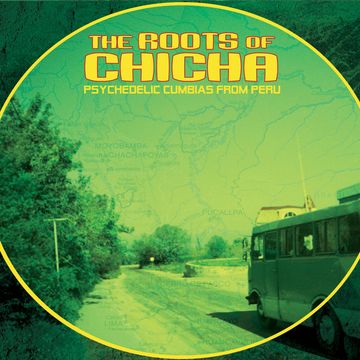
- «Muchachita del Oriente» — the band’s most romantic, danceable side; it is included on The Roots of Chicha (2007).
Silence and return
In the 1990s the Peruvian music market turned to other genres and the name Los Mirlos faded from the Lima media, although the band kept touring Argentina, Colombia, the United States and other countries through the 1990s and 2000s.
The turning point came with the international rediscovery of the genre. Barbès Records’ compilation The Roots of Chicha (2007) included Los Mirlos tracks and put them in front of new audiences. Specialist music press in Europe and the United States began describing Peruvian chicha as one of the most interesting and least known genres in Latin America.
Los Mirlos answered the interest. Tours of Europe followed, along with a KEXP session in 2023 for their 50th anniversary, the Coachella stage in 2025 and an NPR Tiny Desk in 2026 —proof that the sound was not just nostalgia but a living proposition. Peru’s Ministry of Culture recognised them as a Personalidad Meritoria de la Cultura (Distinguished Cultural Figure).
The legacy: from Moyobamba to the world
Los Mirlos’ impact on contemporary music is hard to overstate. Their sound is a direct reference for electronic cumbia artists such as Dengue Dengue Dengue, for global psychedelic cumbia projects such as Chicha Libre, and for tropical bass producers around the world who sample, reinterpret or simply cite their catalogue as an influence.
Los Mirlos’ Discogs page —which includes several regional and period variants of the name— is one of the most thoroughly annotated in the genre, with collectors in Argentina, Spain, Japan, France and the United States tracking down every original pressing from the Infopesa catalogue.
In 2026, Los Mirlos are still playing. The Amazonian sound they invented in Moyobamba more than fifty years ago does not belong to any particular era. It belongs to the river and the jungle, and to any listener willing to be carried away by the fuzz and the rhythm.