
If Peruvian chicha had a record-industry map, its two most visible poles would be Infopesa and Discos Horóscopo. They did not compete for exactly the same audience or the same sound, but together they documented a country on the move: the electric jungle exporting psychedelic cumbia, and migrant Lima turning keyboards and Andean cumbia into a mass phenomenon.
Two foundings, two bets
Infopesa was born in 1971 under Alberto Maraví with a national vision: record the popular music the big companies ignored and distribute it beyond the capital. Its Amazonian catalogue —Los Mirlos, Juaneco y Su Combo— defined the global aesthetic of Peruvian psychedelic cumbia. It ran as an active label until its main era ended around 1989, leaving an archive that his son Juan Ricardo Maraví would revive decades later.
Horóscopo appeared in 1977 with Juan Campos Muñoz, owner of a mechanic’s workshop in Barranca turned producer, and a more Lima-focused bet: capturing the migrant wave that was transforming entire neighbourhoods. Its roster included Los Shapis, Chacalón y la Nueva Crema and Los Ovnis. After shining in the 1980s, the label faded for some thirty years until Jalo Núñez del Prado found Campos in Barranca in 2015 and drove the relaunch of the catalogue from Lima and Madrid.
Geographies: jungle versus city
Infopesa looked to eastern Peru. Its saturated covers, fuzz guitars and lyrics about the river and the jungle built an imagery that the outside world would come to associate with the word chicha. Although the studio was in Lima, the story told on record was Amazonian: Pucallpa, Moyobamba, Iquitos, Tarapoto.
Horóscopo recorded the capital those provinces had created. Casio keyboards, lyrics about hard urban lives, packed dance tents and a cholo aesthetic marked its identity. Horóscopo chicha is music of asphalt and brick, not canopy and mist.
Different aesthetics, intertwined audiences
The audiences were not fully separate. A migrant from Ucayali living in San Juan de Lurigancho could dance to Juaneco at the neighbourhood party and buy a Los Shapis record the next day. The sounds coexisted in the same informal economy of cassettes, fairs and rented sound systems.
The differences lie in the lead instruments and in the kind of fantasy each catalogue offers. Infopesa sells the electric jungle; Horóscopo sells urban belonging. The audience, on the other hand, moved easily from one catalogue to the other.
Two declines, two revivals
Both labels declined in the late 1980s: economic crisis, political violence, piracy and the transformation of the physical record industry. Infopesa closed as an active label in 1989, the same year Juan Campos left Horóscopo. The oblivion was not total —the records kept circulating in markets— but it was commercial.
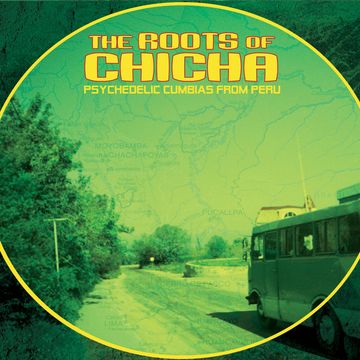
The rediscovery came by different routes. Infopesa benefited from international compilations such as The Roots of Chicha on Barbès Records and from reissues by specialist labels; the Maraví family archive added legitimacy and continuity. Horóscopo was reborn through something closer to a direct relaunch from Lima and Madrid, with Juan Campos back in the picture as a living narrator of his era.
Two Perus in one genre
Talking about chicha without telling these two worlds apart causes confusion. A casual listener who discovers Amazonian cumbia through Los Mirlos may know nothing about Chacalón; a fan of 1980s Lima chicha may never have heard of Juaneco y Su Combo. A complete picture of the genre needs both poles.
In terms of class and migration, Horóscopo is more explicit; in terms of global imagery, Infopesa won the first export battle. Neither is secondary: they are two faces of the same historical process of popular modernisation —violent, creative and overflowing.
The legacy
Infopesa and Horóscopo do not exhaust Peru’s record history —Virrey, DINSA, Sono Radio and dozens of regional labels widen the picture— but they do offer its clearest axis. Between jungle and city, between fuzz and Casio, between Alberto Maraví and Juan Campos Muñoz, a Peru takes shape that danced when the institutions did not represent it. Listening to both catalogues means hearing two countries that lived side by side in a single capital.