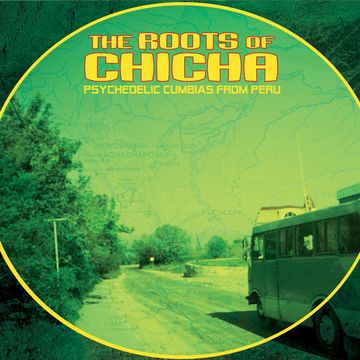
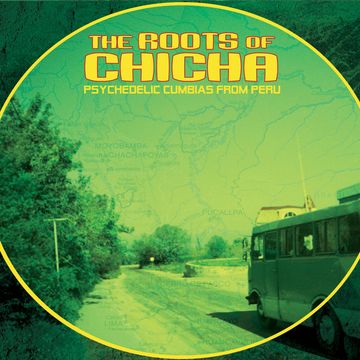
In the early 2000s, Peruvian records from the 1970s lay in Lima’s flea markets and street stalls with no idea they were about to redefine a global genre. The compilation The Roots of Chicha, released in 2007 by Brooklyn’s Barbès Records, condensed that forgotten archive into one record that redirected the international conversation about psychedelic cumbia.
Olivier Conan and the Barbès ear
Olivier Conan, a French musician based in New York, had opened the bar Barbès in Park Slope (Brooklyn) in 2002 with guitarist Vincent Douglas, naming it after the Parisian neighbourhood of Barbès, a melting pot of immigration and world music. Chicha did not reach him at the bar but on a trip to Lima in the mid-2000s, where he heard recordings that sounded like something else —rawer, more electric, more jungle— than standard cumbia.
Conan was neither an archive ethnomusicologist nor a collector fixated on the exotic. He was a working musician with an active project: he wanted to understand where that sound came from so he could bring it into his own work. That practical curiosity set the tone for Barbès Records, a label that mixed reissues, compilations and contemporary bands without treating Peruvian music as a fossil.
Volume 1: the record that opened the door
The Roots of Chicha: Psychedelic Cumbias from Peru, Vol. 1 gathered tracks by Los Mirlos, Juaneco y Su Combo, Los Destellos and other 1970s bands such as Los Hijos del Sol and Los Diablos Rojos: 17 tracks, much of them from the Infopesa catalogue. The selection put fuzz guitars, shrill keyboards and cumbia rhythms first, with an urgency that surprised European and American listeners used to more polished versions of the genre.
The impact on the mass market was not instant, but it ran deep in alternative circuits: DJs, specialist journalists, rock musicians and world music producers began citing the record as a map for exploration. In Lima, where part of the original catalogue had fallen into commercial oblivion, the compilation worked as an unexpected mirror: many Peruvian listeners discovered or rediscovered their own history through a New York label.
Volume 2 and a wider canon
The second volume came out three years later, in 2010, extending the time span and the geography. If the first presented a minimal canon, the second showed chicha’s internal diversity: lesser-known pieces, regional variants and nuances that avoided the idea of a single «jungle sound». The sequel established Barbès as the editorial reference of the revival.
Conan has said in interviews that one of the project’s most unexpected consequences was its effect in Peru itself: young people in Lima and Amazonian musicians regained pride in a repertoire that for years had been treated as music of low social standing. The rediscovery was not just an export; it was also a symbolic return to the country of origin.
Chicha Libre and the Park Slope bar
Alongside the compilations came Chicha Libre, the band Conan himself formed in Brooklyn to reinterpret the classic repertoire with Farfisa organ and fuzz guitars. They were not a bar cover band: the group offered a contemporary reading that kept the psychedelic spirit without turning the jungle into theatre.
Barbès Records, founded in 2004, connected those records with global distribution. Geography matters: the revival was not born in a museum but in a small Park Slope bar, Chicha Libre’s regular stage, and in the Lima record stalls where Conan found the vinyl that would later spin in Europe.
After Brooklyn: a genre on the move
The success of The Roots of Chicha paved the way for other labels —Vampisoul, Analog Africa, Tiger's Milk Records— that expanded reissues and anthologies. Los Mirlos went back on international tour; collectors tracked down original pressings; electronic cumbia producers worked in samples and references.
The phenomenon also sparked legitimate debates about who tells the story, who profits and how the original musicians are compensated. Those tensions do not diminish the value of the recovered archive, but they are a reminder that every revival carries editorial and financial responsibility.
The legacy
The Roots of Chicha did not invent Amazonian cumbia: it took it out of the drawer and gave it an international name. From Brooklyn, Olivier Conan and Barbès Records built a bridge between Pucallpa, Moyobamba and audiences who had never set foot in the jungle. Today, when a festival in Berlin or a club in Mexico City books Peruvian chicha, the mark of those compilations is still there in the repertoire and in the way it is heard.